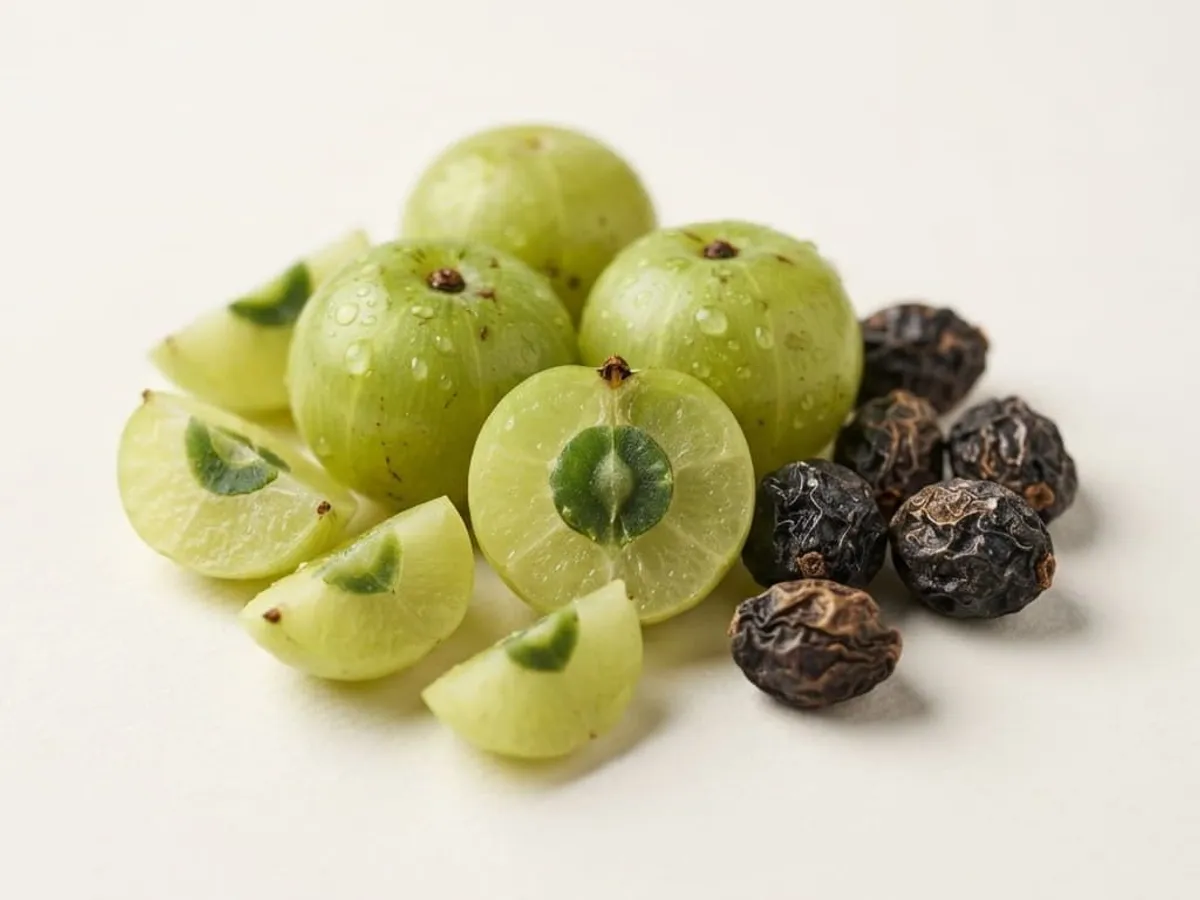
In short: Amla, or amalaki, is the Indian gooseberry that ripens in the cold months and lands in pickles, murabba and chyawanprash. Ayurveda prizes it as a cooling rasayana that balances all three doshas, especially pitta. Many people take amla juice or powder in the morning for vitality, digestion and winter resilience, and use it traditionally for hair and eyes. Keep amounts modest and follow the label.
Key facts
- Also called
- Amalaki, dhatri, aonla, nellikai (Tamil), Indian gooseberry
- Botanical name
- Phyllanthus emblica (also Emblica officinalis)
- Part used
- Fruit, fresh or dried
- Common forms
- Fresh fruit, juice, churna, murabba, candy, chyawanprash, tablets
- Ayurvedic view
- Cooling rasayana that balances all three doshas, especially pitta
- Usually taken
- In the morning, with water or honey, in small amounts
What is amla?
Amla is the hard, round, pale-green fruit of the Indian gooseberry tree, Phyllanthus emblica. It is crisp, juicy and so sour that your mouth puckers, and then a sweet aftertaste follows when you sip water.
The fruit ripens in the cold months after Diwali, when carts and mandis fill with green heaps of it. Families buy it by the kilo to make pickle, murabba, candy and juice that last long after the season ends.
Amla also has a sacred place. The tree is worshipped on Amla Navami in the month of Kartik, and many families cook and eat under it that day. It is also one of the three fruits of triphala, together with bibhitaki and haritaki.
Why does Ayurveda call amla a rasayana?
Ayurveda names amla amalaki and lists it among the most valued rasayanas for a long, healthy life. One of its Sanskrit names, dhatri, means the nurse, because the fruit is said to look after the body like a caring mother.
Amla is unusual because it carries five of the six Ayurvedic tastes: sour most of all, then sweet, bitter, pungent and astringent, missing only salty. Its potency is cooling, so it calms pitta without upsetting vata or kapha, and Ayurveda describes it as balancing all three doshas.
This all-round balance is why amla is the base of chyawanprash, the herbal jam many of us were fed by the spoonful every winter as children. Vaidyas like to call it the one fruit almost everyone can enjoy in the right amount.
What are the main benefits of amla?
People take amla for overall vitality, and its traditional uses reach almost every part of the body. Here are the reasons Indian families keep it close at hand in the kitchen.
- Seasonal resilience: amla is naturally rich in vitamin C and supports the body's natural defences, especially through winter.
- Digestion: its sour taste kindles agni, while its cooling nature soothes a pitta-type stomach that is prone to acidity.
- Hair: amla is a classic ingredient in hair oils and is valued for strong, dark, healthy-looking hair.
- Skin: as an antioxidant-rich fruit, it is taken for a fresh, glowing complexion.
- Eyes: Ayurveda names it chakshushya, a substance that is good for the eyes.
- Sugar care: amla is a common partner of jamun, gudmar and karela in Ayurvedic blends for people who watch their sugar.

What are the benefits of amla juice?
Amla juice is the most popular way to take amla today because it is quick and needs no chopping or grating. People drink it for vitality, digestion, hair and skin, and as a bright, tangy start before morning tea.
A common way is a few teaspoons to two tablespoons of amla juice in a glass of water on an empty stomach; follow the label or your Ayurvedic practitioner. Some add a teaspoon of honey or a pinch of rock salt, and many mix it with aloe vera or giloy juice.
Because amla is very sour, sip it well diluted and rinse your mouth with plain water afterwards to protect your teeth. If you have a sensitive stomach, take it after a light breakfast instead of first thing in the morning.
How do you take amla powder?
Amla powder (amla churna) is the dried fruit ground fine, and it keeps well for months. The usual traditional amount is about half to one teaspoon once a day with warm water or honey; follow the label or your Ayurvedic practitioner.
Ayurveda suggests different carriers for different needs: with honey in the morning for vitality, with warm water at night for digestion, or with a little ghee for dry, vata-type skin and hair. It also stirs easily into curd, buttermilk or a fruit smoothie.
Amla powder is the base of many homemade hair packs too. Mix it with curd, or with shikakai and reetha powders, apply it to the scalp for about half an hour and wash it off. Store the powder in a dry, airtight jar because it soaks up moisture quickly.
Is amla good for hair?
Yes, amla is India's best-known hair herb. Grandmothers have long made amla oil by slowly cooking dried amla in coconut or sesame oil, and massaged it into children's hair before the Sunday head bath.
Ayurveda links early greying and hair fall with excess pitta, and amla's cooling nature is traditionally used to bring it back into balance. That is why people use amla both inside, as juice or powder, and outside, as oil and hair packs.
For the best feel, combine amla with good sleep, less stress and a diet with enough protein and greens. Hair grows slowly, so give any amla habit a few months before you judge it.
Is amla good for the eyes?
In Ayurveda amla is called chakshushya, which means good for the eyes, and it is a key part of triphala, the blend traditionally used to support the eyes. Its cooling quality is valued for eyes that feel hot, dry or tired.
Today many of us spend long hours on phones and laptops, and our eyes feel the strain by evening. Amla juice or powder can be one part of an eye-friendly diet, alongside leafy greens, carrots, enough water and short breaks to look into the distance.
Never put homemade amla preparations directly into your eyes. If your vision changes or your eyes hurt or turn red, see an eye doctor without delay.
Amla murabba, candy or chyawanprash: which form suits you?
Choose by taste and need. Murabba and candy are sweet and pleasant, so children and elders enjoy them, while juice and powder carry no added sugar and suit anyone cutting down on sweets.
- Murabba: whole amla slow-cooked in sugar syrup; one piece after breakfast is a classic winter habit.
- Candy: dried, sweetened pieces, handy for travel and nice as an after-meal mouth freshener.
- Chyawanprash: the famous herbal jam with amla as its base, usually a spoonful with warm milk.
- Pickle: spicy and salty, enjoyed in small amounts with dal-chawal.
- Tablets and capsules: amla in measured form, alone or as part of herbal blends.
Can amla help people watching their blood sugar?
Amla is one of the fruits Ayurveda most often combines with jamun, gudmar, karela and turmeric in blends for people who keep an eye on their sugar. A classic pairing is amla with haldi, known as nisha amalaki, taken together in the morning.
If you have diabetes, speak to your doctor before adding amla supplements, and pick unsweetened forms over murabba and candy. Keep taking prescribed medicines, check your readings as advised and tell your doctor about every herb you use.
Read the label for sugar per serving whenever you buy sweet amla products. A ready tablet that lists amla among other sugar-care plants is an easy option for busy days.
A note on safety
Amla is a food and a herbal supplement, not a medicine, and it supports rather than replaces your doctor's advice. If you take medicines for diabetes, blood pressure or blood thinning, or you have kidney or stomach concerns, ask your doctor before taking amla supplements regularly. Pregnant and breastfeeding women should keep to food amounts unless their doctor agrees to more, and children need smaller amounts. If you have any illness, carry on with your prescribed medicines and see a doctor about symptoms.
Written by the Herbal360 editorial team — independent information about herbal and Ayurvedic supplements in India.