In short: Triphala means «three fruits»: amalaki (amla), bibhitaki (baheda) and haritaki (harad). Ayurveda calls it tridoshic and a rasayana, gentle enough for long use. People take it mainly for easy, regular mornings, a light stomach and overall digestive comfort. It comes as churna, tablets and capsules. Pregnant women, children and people on regular medicines should ask a doctor before starting.
Key facts
- Also called
- Triphala, trifla, «three fruits»
- The three fruits
- Amalaki (amla), bibhitaki (baheda), haritaki (harad)
- Botanical names
- Emblica officinalis, Terminalia bellirica, Terminalia chebula
- Common forms
- Churna (powder), tablets, capsules
- Ayurvedic view
- Tridoshic rasayana; supports agni and gentle cleansing
- Usually taken
- About half to one teaspoon with warm water at bedtime
What is triphala churna?
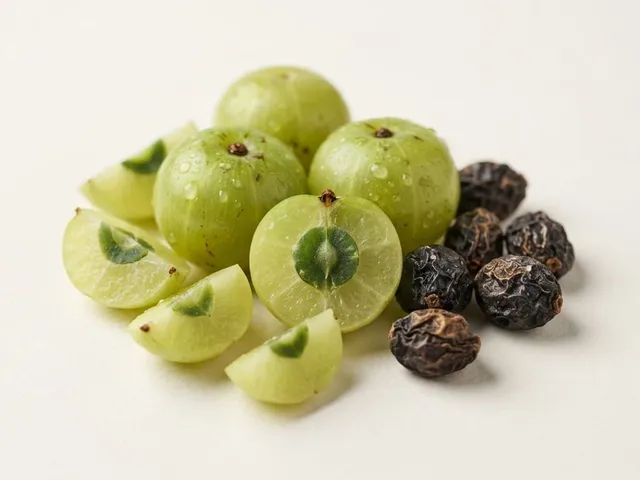
Triphala churna is a fine brown powder made from three dried fruits in equal parts: amalaki (amla, Emblica officinalis), bibhitaki (baheda, Terminalia bellirica) and haritaki (harad, Terminalia chebula). Churna simply means powder.
It is one of the most widely used formulas in Ayurveda and a familiar name in almost every Indian family. Many of us remember a grandparent mixing a spoon of it in warm water before bed and calling it the best friend of the stomach.
Each fruit brings something of its own. Amla is cooling and rich in vitamin C, baheda is associated with the chest and kapha, and harad is the fruit Ayurveda reveres most for digestion. Together they make a balanced, gentle blend.
How does Ayurveda see triphala?
Ayurveda sees triphala as a tridoshic rasayana, a rejuvenating formula that suits vata, pitta and kapha alike. Amla calms pitta, baheda balances kapha and harad settles vata, so the blend is balanced for most body types.
It is valued for supporting agni, the digestive fire, and for helping the body clear what Ayurveda calls ama, the heavy, sticky residue of poorly digested food. Triphala does this gently, which is why it is used for long periods rather than as a strong one-time purge.
Triphala carries five of the six Ayurvedic tastes, all except salty. Tradition says this wide range of tastes is part of why it nourishes as well as cleanses.
What are the main triphala churna benefits?
The main triphala churna benefits people look for are regular, comfortable bowel movements, a lighter stomach after meals and a gentle daily cleanse. Ayurveda also values it as a rasayana for eyes, skin and healthy ageing.
Researchers have studied triphala and its three fruits with interest for digestion and antioxidant content, and it has become one of the best-known Ayurvedic formulas worldwide. Indian families most often take it for:
- Easy, regular mornings without straining
- Comfort after heavy, oily or festive meals
- Support for appetite and digestion through agni
- A gentle cleanse that can be used for long periods
- Traditional care for the eyes, skin and hair

Is triphala good for constipation?
Yes, constipation is the reason most people take triphala. Ayurveda uses it to support soft, regular bowel movements in a gentle way, without the sudden cramping of a strong laxative.
Haritaki is the fruit that does most of this work, while amla and baheda add balance and tone. Because it is gentle, many people find it helps them settle into easy mornings over a few days rather than overnight.
Triphala works best with simple habits: enough water through the day, fibre from vegetables, fruit and whole grains, and some walking after dinner. If constipation is new, painful or comes with blood, see a doctor rather than relying on herbs alone.
Does triphala support digestion after heavy meals?
Yes, triphala is traditionally taken to support digestion, ease the heavy, bloated feeling after rich food and keep the appetite steady. Ayurveda links this to its effect on agni, the digestive fire.
Harad and baheda are valued for helping food move comfortably through the gut, while amla keeps the blend cooling, so it does not add heat after a spicy meal. Many people notice a lighter stomach and fewer sluggish mornings once they take it regularly in the evening.
Triphala is not a digestive tablet you chew after a single biryani. It works quietly over days and weeks, alongside smaller dinners, a gap of two to three hours before sleep and the old habit of sipping warm water through the day.
What are the other uses of triphala?
Beyond digestion, triphala is traditionally used for the eyes, the mouth, the skin and the hair. These uses come from household Ayurveda and are passed down in families across India.
For the eyes, Ayurveda describes triphala as chakshushya, a formula that supports eye health, and it is taken internally, sometimes with ghee and honey as triphala ghrita. Some traditional texts also describe eye washes, but please do not put anything into your eyes without advice from an eye doctor.
Many families use a cooled triphala decoction as a mouth rinse or gargle, as a final rinse for hair after washing, or as a gentle face wash. These simple kitchen uses show how much Indian homes trust this blend.
Triphala powder vs tablets: which should you choose?
Choose powder if you want the traditional method and can handle the taste, and tablets or capsules if you want a quick, taste-free option. Both carry the same three fruits.
Triphala churna tastes sour, bitter and astringent all at once, which many people find strong at first. Ayurveda says the taste itself is part of how it works on digestion, so purists prefer the powder in warm water.
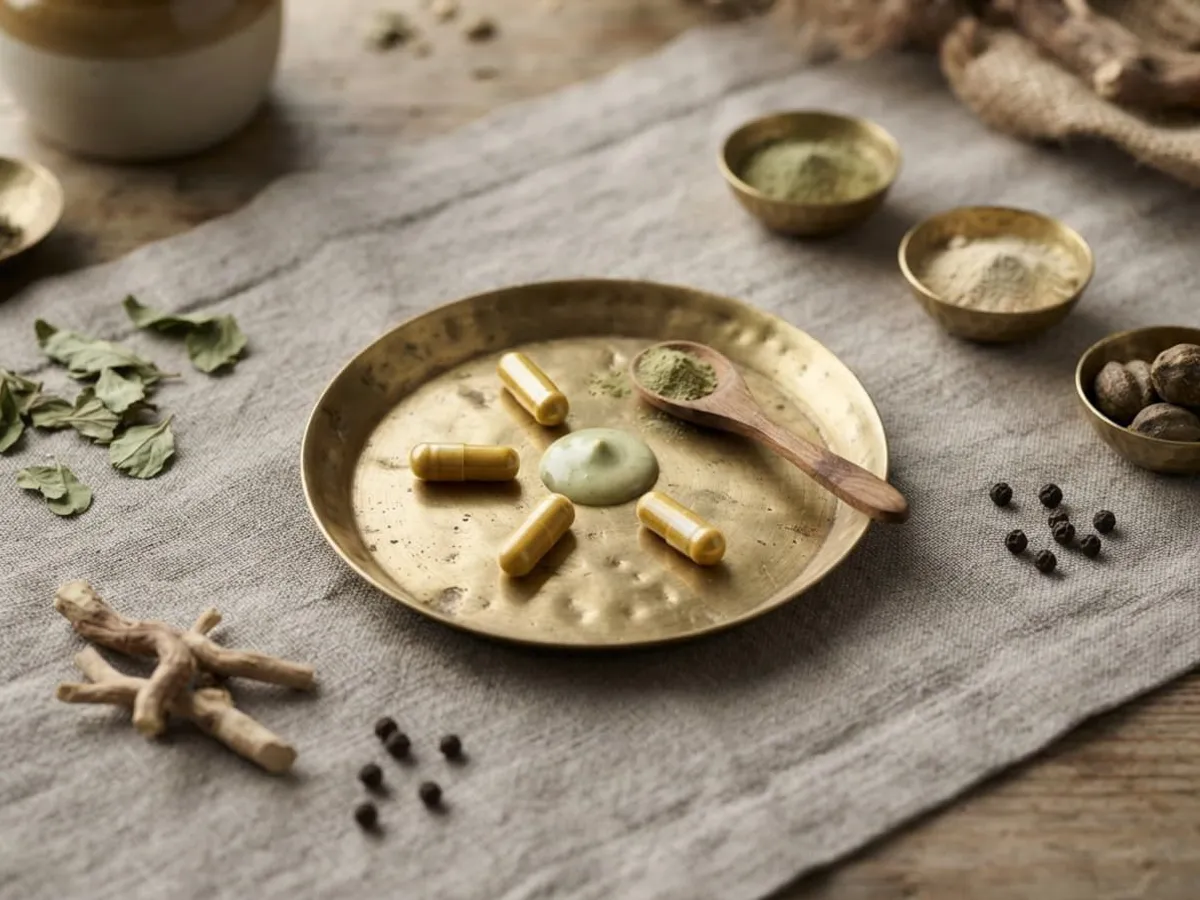
Tablets and capsules are easier for working people, travellers and anyone who simply cannot drink the powder. Check the label for how many tablets equal the usual amount of churna, and follow the dose printed on the pack.
How to take triphala at night?
To take triphala at night, mix about half to one teaspoon of churna in a cup of warm water and drink it about an hour after dinner or just before bed. Follow the label or your Ayurvedic practitioner for the exact amount.
Start with the smaller amount for the first few days and increase only if needed. Some people soak the powder in water overnight and drink it in the morning instead, which feels milder.
Ayurveda also uses different carriers, called anupana: warm water for most people, a little honey for kapha types and a spoon of ghee for dry vata types. Tablets and capsules are simply taken with warm water at bedtime.
How does triphala fit into Indian daily life?
Triphala fits naturally into an Indian evening, after the last cup of chai and before sleep. It pairs well with the way many of us already eat: dal, sabzi and roti, with heavier meals on weekends and festivals.
After Diwali sweets, wedding feasts or monsoon pakoras, many families keep a jar of triphala ready for the days that follow. Elderly parents often take it as a lifelong evening habit, sitting on the veranda with a glass of warm water.
It also teaches a useful lesson from Ayurveda: digestion is the centre of good health. Eating on time, chewing well and walking after dinner make triphala even more comfortable.
How do you choose a good triphala product?
A good triphala product names all three fruits on the label, ideally in equal parts, and gives a clear dose, batch number and expiry date. The powder should smell fresh and fruity-earthy, not musty.
Store churna in an airtight jar away from steam and sunlight, since moisture during the monsoon makes it clump. If you prefer a ready formula aimed at gut cleansing and digestive comfort, a capsule product can be easier than mixing powder every night.
Choose a seller who explains the product clearly on the phone and offers cash on delivery, so you can check the pack before paying.
A note on safety
Triphala is a herbal supplement, not a medicine, and it does not replace any treatment prescribed by your doctor. Pregnant or breastfeeding women and children should take it only on medical advice. Avoid it during diarrhoea or loose motions. Speak to your doctor first if you have a bowel condition, are underweight, take medicines for diabetes or blood thinning, or have surgery planned. Do not stop prescribed medicines on your own, and see a doctor if bowel problems persist.
Written by the Herbal360 editorial team — independent information about herbal and Ayurvedic supplements in India.