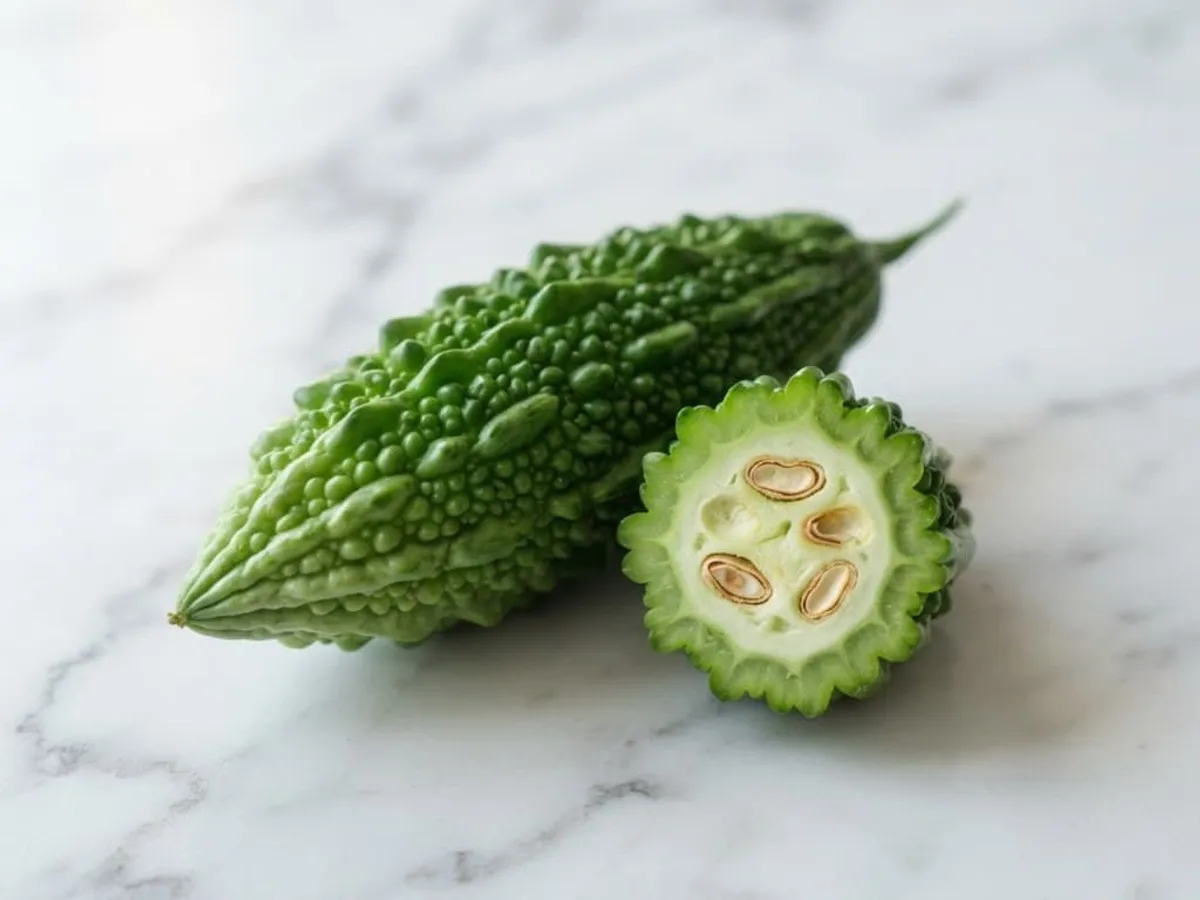
In short: Bitter and astringent plants are Ayurveda's traditional companions for sugar balance: karela, jamun, methi, gudmar and vijaysar. Take them as foods or in simple kitchen forms, keep amounts modest, and pair them with home-cooked meals and movement. Never stop or change prescribed medicines on your own, and speak to your doctor before adding herbs if you already take diabetes medicine.
Key facts
- Main herbs
- Karela (bitter gourd), jamun seed, methi (fenugreek), gudmar, vijaysar
- Botanical names
- Momordica charantia, Syzygium cumini, Trigonella foenum-graecum, Gymnema sylvestre, Pterocarpus marsupium
- Parts used
- Fruit and juice, seeds, leaves, heartwood
- Common forms
- Fresh juice, churna (powder), soaked seeds, tablets and capsules
- Ayurvedic view
- Bitter (tikta) and astringent (kashaya) tastes that balance kapha
- Usually taken
- Small amounts with or before meals, as the label or your Ayurvedic practitioner advises
Which Ayurvedic herbs help with sugar control?
Ayurveda leans on a small group of bitter and astringent plants to help maintain healthy blood sugar as part of diet and lifestyle. Most of them are already familiar from the Indian kitchen or the summer fruit cart.
These herbs are supporters, not substitutes. They sit beside home-cooked food, movement, good sleep and the care your doctor already gives you.
- Karela (bitter gourd): eaten as sabzi or taken as fresh juice
- Jamun (Indian blackberry): the dried seeds are ground into a fine powder
- Methi (fenugreek): seeds soaked overnight or sprouted, leaves cooked into thepla and parathas
- Gudmar (Gymnema): a forest climber whose leaves are known for dulling the sweet taste
- Vijaysar (Indian kino tree): heartwood traditionally used in wooden tumblers
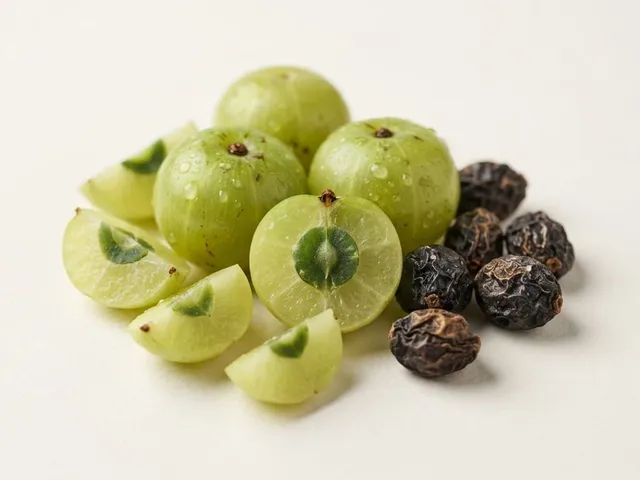
- Supporting herbs: amla, giloy, haldi and bael, often found together in herbal formulas
How does Ayurveda look at blood sugar?
Ayurveda describes a group of conditions called prameha, linked with heaviness and excess kapha in the body. Madhumeha, literally “honey urine”, is the form classical texts describe with sweetness in the urine. The Ayurvedic approach looks at whole-body balance: digestion, food, activity and sleep.
Because kapha is heavy, sweet and slow, Ayurveda balances it with the opposite tastes: bitter (tikta), astringent (kashaya) and pungent (katu). That is why the herbs in this guide taste bitter or puckering. Karela, methi and gudmar are bitter; jamun and vijaysar are astringent.
Daily habits carry equal weight. Classical advice includes regular exercise, avoiding long naps after heavy meals, and choosing barley, millets, green vegetables and pulses over large amounts of rice, sweets and fried snacks.
What are the benefits of karela juice?
Karela juice is the herb most Indian families try first. Bitter gourd is valued in Ayurveda for its strong bitter taste, which is seen as balancing kapha and supporting digestion, and it is a traditional companion for people who want to help maintain healthy blood sugar.
Researchers have studied bitter gourd for its natural plant compounds and their role in the body's sugar balance. In the kitchen it is also a good source of fibre and vitamin C, and a plate of karela sabzi with roti fits any balanced meal.
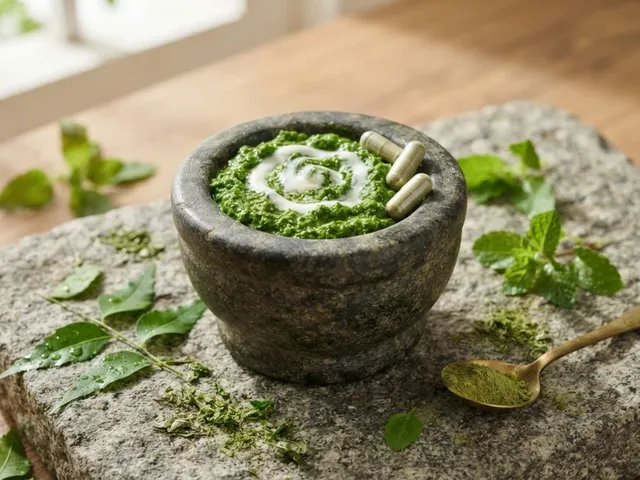
To make the juice, lightly scrape the rough skin, remove the seeds and blend the flesh with water, a squeeze of lemon and a pinch of salt. Most people drink a small cup fresh in the morning, a few times a week. Start small, because too much karela can upset the stomach.

How do you take jamun seed powder?
Jamun seed powder, called jamun beej churna, is a classic Indian home preparation for sugar balance. After the summer jamun season, families wash and sun-dry the seeds, crack off the outer shell and grind the kernels into a fine powder that keeps for months.
The usual traditional amount is about half to one teaspoon with water, once or twice a day before meals; for a ready-made churna, follow the label or your Ayurvedic practitioner. The taste is mildly bitter and astringent, so some people stir it into a glass of chaas.
Ayurveda values jamun for its astringent, cooling nature. The ripe purple fruit is a seasonal pleasure, but it is the seed that carries jamun's traditional reputation in sugar care.
Is methi seeds water good for sugar balance?
Methi water is one of the easiest herbal habits to start. Soak about a teaspoon of fenugreek seeds in a glass of water overnight, drink the water in the morning and chew the softened seeds if you like. Many people find it a gentle way to begin the day.
Fenugreek seeds are rich in soluble fibre, which turns into a soft gel in water. That fibre is why methi is traditionally valued for steady digestion and for helping maintain healthy blood sugar as part of diet and lifestyle, and researchers have taken an interest in it too.
Methi is warming and can make some people feel gassy at first, so begin with a small amount. Methi leaves in thepla, aloo methi and dal are equally good ways to bring this herb onto your plate.
Why is gudmar called the “sugar destroyer”?
Gudmar, also written gurmar, comes from Hindi words meaning “destroyer of sugar”. The name describes something you can feel: when you chew a fresh gudmar leaf, sweet foods taste flat for a little while afterwards, because the leaf briefly dulls the sweet taste on the tongue.
Ayurveda values this bitter forest climber, Gymnema sylvestre, for people who want to keep an eye on sweets. It is usually taken as a powder, tablet or capsule rather than as fresh leaves, often combined with jamun, karela and vijaysar.
The striking name is a folk description of that taste effect. In daily life gudmar is a supporting herb within a balanced lifestyle; follow the label for the amount and check with your doctor if you take diabetes medicine.
What is vijaysar and why the wooden tumbler?
Vijaysar (Pterocarpus marsupium), the Indian kino tree, grows in the forests of central and southern India. Its heartwood is one of the most respected Ayurvedic herbs for sugar balance and appears in many classical and modern formulas.
The most charming tradition around it is the vijaysar tumbler. Families fill a glass carved from the wood with water at night; by morning the water turns reddish-brown, and they drink it on an empty stomach. Vijaysar is also sold as wood chips, powder and in tablets.
A wooden tumbler gives less colour as the months pass and eventually needs replacing. Rinse it only with plain water and let it dry fully between uses.
Can I take these herbs with diabetes medicine?
Only after talking to your doctor. Karela, jamun, methi and gudmar are traditionally used to help maintain healthy blood sugar, and diabetes tablets and insulin act on sugar in a much stronger way. Taken together, they can push sugar too low, which shows up as shakiness, sweating, sudden hunger, confusion or dizziness.
So never start a herbal formula quietly on top of your tablets. Tell your doctor which herbs you plan to take, keep checking your sugar as your doctor advises, and let them adjust anything if needed. Do not stop or reduce prescribed medicine on your own.
If you ever notice signs of low sugar, take something sweet at once, such as glucose powder, fruit juice or a spoon of sugar in water, and contact your doctor.
How do herbs fit with food and daily habits?
Herbs are the smallest part of sugar balance; the plate and the walk are the biggest. A home-style Indian meal already gives you plenty to work with: dal, sabzi, salad and curd, with roti made from whole wheat, bajra or jowar, and rice in a modest portion.
A few simple habits support healthy sugar levels every day:
- Fill half the thali with vegetables and dal before reaching for rice or roti
- Take a short walk after lunch and dinner, even if it is just around the colony
- Keep mithai and very sweet chai for festivals rather than every evening
- Choose whole fruits like guava, apple or jamun instead of packaged juices
- Sleep on time and ease stress with yoga or pranayama
- Get your sugar checked as often as your doctor suggests
Kitchen remedy or ready tablet: which is easier?
Fresh karela juice, soaked methi and homemade jamun churna are economical and familiar, but they take daily effort, and the bitter taste is not for everyone. Many people start keenly and drift away after a few weeks.
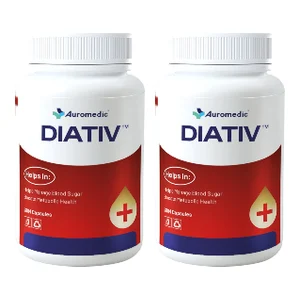
A ready tablet or capsule combines several herbs in one measured dose, with no blending, soaking or bitter taste. Look for a formula whose label clearly names its herbs and explains how to take it, and buy from a seller with a clear contact and cash on delivery.
Whichever path you choose, take it consistently, keep your meals and walks on track, and keep your doctor informed.
A note on safety
These herbs are food supplements, not medicines, and they do not replace your diabetes care. If you take tablets or insulin for diabetes, talk to your doctor before adding karela, jamun, methi, gudmar or any sugar formula, because together they can push sugar too low. Ask first too if you are pregnant or breastfeeding, have kidney or liver problems, take blood thinners or are planning surgery. Keep monitoring your sugar as your doctor advises, never stop prescribed medicines on your own, and see a doctor promptly for unusual thirst, tiredness or weight changes.
Written by the Herbal360 editorial team — independent information about herbal and Ayurvedic supplements in India.