In short: Isabgol (Plantago ovata) husk is one of India's most trusted kitchen remedies for constipation. Stir about one to two teaspoons into a full glass of water or warm milk at bedtime, drink it straight away and follow it with more water. With curd, it is traditionally used for loose motions. Keep a two-hour gap from medicines, and see a doctor for bleeding or severe pain.
Key facts
- Also called
- Isabgol, isabgol bhusi, ispaghula, psyllium husk, Plantago ovata
- Part used
- The thin husk around the seeds
- Common forms
- Loose husk, flavoured husk granules, powder
- Ayurvedic view
- Sweet, cooling, soft and slippery; soothes vata and pitta in the gut
- Usually taken
- One to two teaspoons in a full glass of water or milk at bedtime
- Key tip
- Always with plenty of water, never dry
What is isabgol?
Isabgol is the husk of the seeds of Plantago ovata, a small plant grown mainly in Gujarat and Rajasthan. India grows much of the world's psyllium, and the white, flaky husk has been a fixture in Indian homes for generations.
The name is usually traced to the Persian words for 'horse ear', after the shape of the tiny seed. In shops you will find it as isabgol bhusi, sat isabgol or simply psyllium husk, sold loose, in packets or as flavoured granules.
Almost every Indian family has a story about it: the packet on the top shelf, the glass of milk with isabgol that a grandfather took every night, the spoonful with curd after a stomach upset.
How does isabgol work in the gut?
Isabgol is a soluble fibre that absorbs many times its own weight in water. In the stomach and intestines, it swells into a smooth, slippery gel.
This gel adds bulk to the stool and keeps it soft and moist, so it moves along more easily and passes without much pushing. That is why the same fibre is used both for hard, dry motions and, with curd, for loose ones: it brings the stool towards a comfortable middle.
Ayurveda describes isabgol as sweet, cooling and snigdha, meaning soft and lubricating. It soothes vata, which governs movement and dryness in the colon, and calms the heat of pitta.
What are the main benefits of isabgol?
The best-known benefit of isabgol is easier, more regular motions. Many people also value it for a light, comfortable feeling in the stomach and as a gentle daily source of fibre.
People commonly take isabgol for:
Researchers have studied psyllium husk as a dietary fibre for digestion, and it remains one of the most widely used fibres in the world.
- Softer stools and easier motions when constipation sets in
- Less straining, which matters a lot for comfort with piles
- Firmer motions during an upset stomach, when taken with curd
- A feeling of fullness that helps with sensible portions
- Extra fibre for people whose meals are low in vegetables and whole grains

How does isabgol help with constipation?
Isabgol helps constipation by adding soft bulk and water to the stool, so the bowel can move it along without strain. It is gentle and works with the body, unlike harsh purgatives.
Constipation in India often comes from the same few habits: too little water in summer, long sitting at a desk or in traffic, white rice and maida in place of whole grains, and late dinners. Isabgol fills the fibre gap while you work on these.
Results are not instant. Many people find motions become easier within a day or a few days of regular use, but each body is different. Stay with it steadily rather than doubling the dose.
Is isabgol good for piles?
Yes, isabgol is one of the most common kitchen supports for people with piles. Piles become far more uncomfortable when stools are hard and you need to strain, and isabgol keeps motions soft and smooth.
Less pushing means less pressure on the swollen veins around the anus, and a calmer, less sore feeling through the day. Ayurveda, which calls piles arsha, also places great weight on keeping the bowels soft and regular.
Isabgol supports comfort; it is not a remedy for the piles themselves. Pair it with water, fibre-rich food, less spicy and fried food, and a short walk after long sitting. If you notice bleeding or sharp pain, see a doctor.
How should you take isabgol at night?
The common way is one to two teaspoons of isabgol husk stirred into a full glass of water or warm milk, about half an hour before bed. Follow the label or your Ayurvedic practitioner for the amount that suits you.
Stir well and drink it right away, before it thickens into a jelly. Then drink another glass of water. Night-time suits most people because the fibre has hours to work and motions come comfortably in the morning.
Start with one teaspoon for the first few days and increase only if needed. A sudden large amount can cause gas and bloating while the gut gets used to more fibre.
- With warm water: the simplest way for constipation
- With warm milk: the traditional bedtime drink, gentle and filling
- With curd or buttermilk: the household way for loose motions
Isabgol husk, powder or granules: which form should you buy?
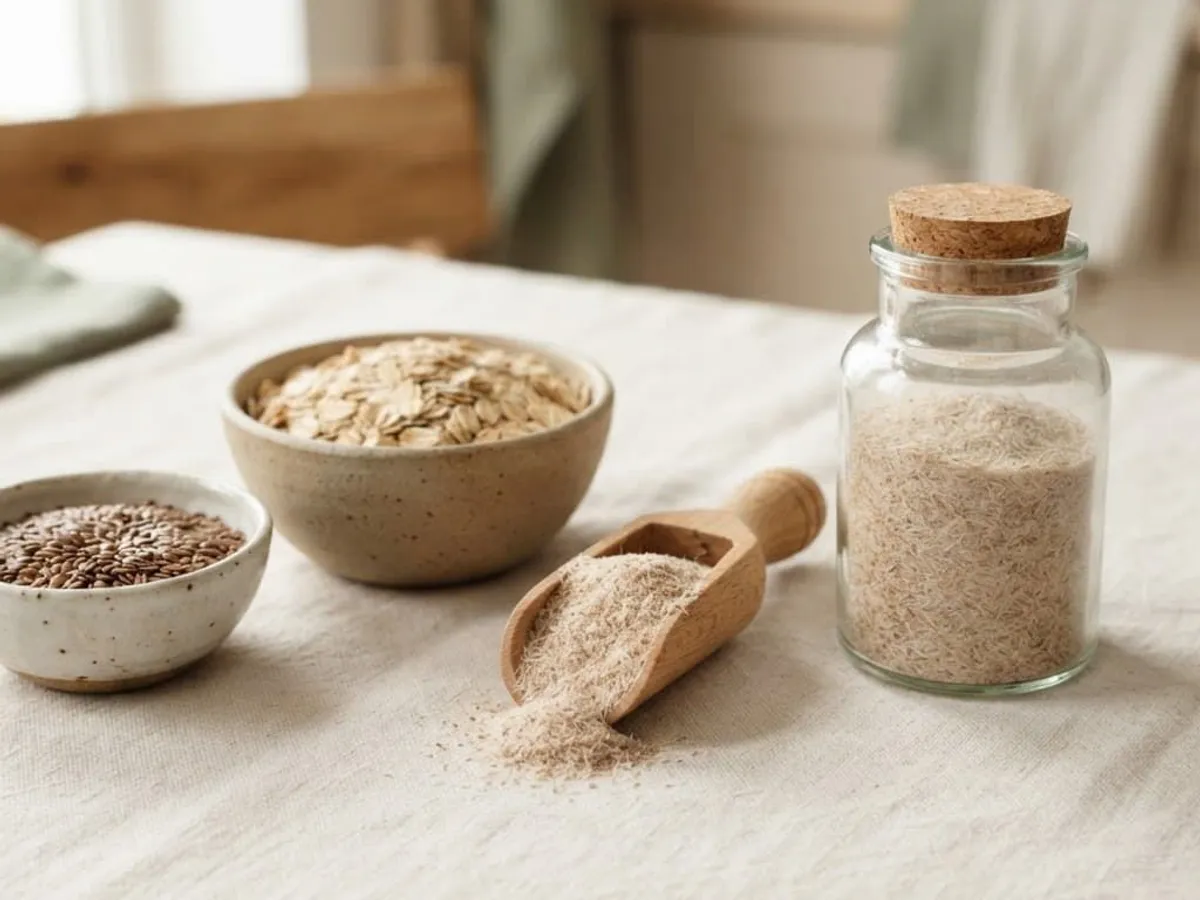
Plain isabgol husk is the classic choice and the one most families keep at home. It is light and flaky, has almost no taste and mixes easily into water, milk or curd.
Isabgol powder is the husk ground finer. It thickens faster, so you need to stir and drink it even more quickly, but some people find it smoother to swallow.
Flavoured granules, often orange or lemon, are popular with people who dislike the plain texture. They are pleasant, though many contain sugar or sweeteners. Whichever form you pick, the rules stay the same: measure with a spoon, mix in a full glass and drink it straight away.
Why does water matter so much with isabgol?
Water is what makes isabgol work. Without enough liquid, the husk cannot form its soft gel, and it may make you feel more blocked instead of less.
Never swallow isabgol dry or with only a sip of water, since it swells quickly and can stick in the throat. Use a tall, full glass for each teaspoon or two, and keep drinking water through the day.
This matters even more in summer, in air-conditioned offices and for older people who often drink less than they need. A bottle on your desk or by the counter is the easiest reminder.
Isabgol with curd: when and why
Isabgol with curd is the traditional Indian choice for loose motions and an upset stomach. The husk soaks up extra fluid in the gut, and curd brings its cooling, familiar comfort.
Mix one to two teaspoons into a bowl of fresh curd and eat it slowly, once or twice a day. For loose motions that go on for more than a day or two, or come with fever, blood or weakness, see a doctor, especially for children and older people.
How can you choose a good isabgol and fit it into daily life?
Choose plain, clean, creamy-white husk in a sealed pack. Flavoured granules are tastier but often contain sugar, so check the label if you watch your weight or blood sugar.
Keep the pack tightly closed in a dry place, since husk takes in moisture fast during the monsoon. Set aside a fixed moment for it, such as the bedtime glass of milk, and make it part of a fibre-friendly plate: dal, sabzi, salad, fruit and whole-wheat roti.
A note on safety
Isabgol is a food fibre and dietary supplement, not a medicine. Always take it with plenty of water, never dry. Keep a gap of about two hours between isabgol and any medicines, because the fibre can slow how they are absorbed. Ask your doctor first if you are pregnant, have diabetes, have trouble swallowing or have had bowel surgery, and before giving it to children. Bleeding from the back passage, severe pain or a sudden change in bowel habits needs a doctor's check.
Written by the Herbal360 editorial team — independent information about herbal and Ayurvedic supplements in India.